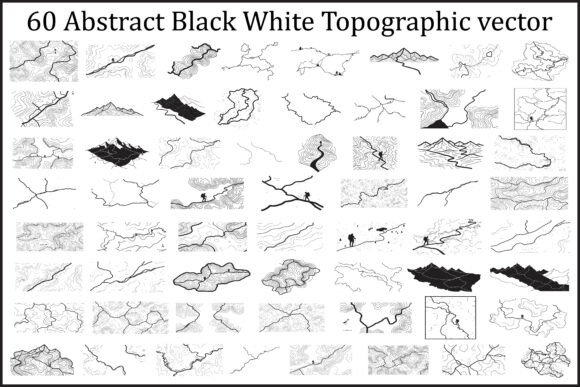
60 Abstract Black White Topographic Designs
In the realm of modern graphic design, the ability to convey depth, structure, and movement without relying on color is a distinct skill. The 60 Abstract Black White Topographic collection addresses this need by offering a premium set of designs that blend elegant contour lines with decorative symbols. For professionals ranging from branding agencies to independent creators, having access to high-quality topographic assets can significantly streamline the design process while elevating the visual impact of a project. This resource is not merely a pack of images; it is a toolkit for solving common design challenges related to texture, layout, and scalability.
The Power of Monochromatic Contour Lines
Topographic maps are traditionally used to represent elevation and terrain, but in graphic design, they have evolved into a powerful aesthetic language. The 60 Abstract Black White Topographic designs leverage this tradition to create visuals that feel grounded yet dynamic. By using only black and white, these designs ensure versatility. They do not clash with existing brand palettes and can serve as subtle backgrounds or bold focal points depending on how they are applied.
The inclusion of nice decorative symbols alongside the contour lines adds a layer of sophistication. These elements prevent the design from feeling too technical or sterile. Instead, they introduce an artistic flair that works exceptionally well for modern posters, editorial layouts, and digital interfaces. When a designer needs to suggest complexity, exploration, or precision without overwhelming the viewer with data or color, abstract topography provides the perfect solution.
Streamlining Professional Print Production
For those involved in print media, file format compatibility is often the difference between a smooth workflow and a costly delay. This collection includes 60 EPS files, which stand for Encapsulated PostScript. This is the industry standard for professional printing. Unlike raster images that lose quality when enlarged, EPS files are fully editable vector formats. This means that a logo, poster, or large-scale banner created with these assets will remain crisp at any size, from a business card to a billboard.
Designers working with Adobe Illustrator or other vector software will find these files immediately usable. You can ungroup elements, adjust line weights, or change the curvature of the contours to fit specific branding guidelines. This level of control is essential for publishers and small business owners who need custom materials that look polished and professional. Without vector capabilities, scaling a design up often results in pixelation, ruining the final product. The EPS format eliminates this risk entirely.
Optimizing Web and UI Performance
While print requires high-resolution vectors, digital projects demand speed and responsiveness. The 60 Abstract Black White Topographic pack addresses this with 60 SVG files. Scalable Vector Graphics (SVG) are 100% scalable without any loss of quality, making them ideal for web use. Unlike PNGs or JPGs, SVGs are defined by code rather than pixels, which allows them to render perfectly on high-density Retina displays and mobile screens alike.
Furthermore, SVG files are lightweight. In an era where page load speed directly impacts user experience and search engine rankings, using heavy image files is a liability. These vector graphics load quickly, ensuring that websites remain snappy even when featuring complex background patterns. Developers and UI designers can easily edit these files in vector editors to match specific screen dimensions or interactive states. Whether creating icons, hero section backgrounds, or app interfaces, the SVG format offers the flexibility needed for modern digital ecosystems.
Flexibility for Social Media and Quick Edits
Not every project requires the full power of vector editing. Sometimes, marketers and content creators need a quick, high-quality asset to drop into a social media post or a presentation slide. This is where the 60 PNG files become invaluable. Portable Network Graphics offer a high-resolution raster format with a transparent background. This transparency is crucial for overlaying topographic designs onto photos, videos, or colored backgrounds without awkward white boxes.
The PNG format is widely supported across all platforms, from Instagram to PowerPoint. It allows for rapid deployment of designs that still look professional. For example, a blogger might use one of these abstract maps as a watermark on their blog header, or a social media manager could layer it over a product photo to add texture. The ability to use these files instantly saves time, allowing creators to focus on content strategy rather than technical formatting issues.
Efficient Sharing and Mockup Creation
Collaboration often requires sharing drafts and concepts with clients or team members who may not have access to professional design software. The 60 JPG files included in the collection solve this problem. JPEG is a high-quality compressed image format known for its small file size. This makes it easy to upload to cloud storage, email, or project management tools without hitting attachment limits.
JPGs are particularly useful for creating mockups and previews. A designer can place a JPG version of a topographic design onto a phone case, t-shirt, or brochure template to show a client how the final product might look. While JPGs are not suitable for final print production due to compression artifacts, they are perfect for the approval stage. They allow stakeholders to visualize the concept clearly before committing to the more complex vector editing phase.
Who Benefits Most From This Collection?
The utility of the 60 Abstract Black White Topographic designs extends across various professions. Entrepreneurs launching a new brand can use these assets to create a cohesive visual identity that suggests reliability and innovation. Marketers can incorporate them into ad campaigns to add visual interest without distracting from the core message. Educators and publishers can utilize the clean lines for infographics and textbook illustrations that explain complex spatial concepts simply.
Freelancers and hobbyists also gain significant advantages. Having a library of 60 unique designs means there is no need to start from scratch for every project. This variety ensures that each piece of work feels fresh and original. However, users should consider their specific output requirements. If a project demands intricate color gradients or photographic realism, these monochromatic vectors may need to be combined with other assets. They are best suited for projects where clarity, structure, and minimalism are the primary goals.
Strategic Implementation Tips
To get the most out of this collection, it is important to understand the strengths of each file type. Do not use a JPG for a large banner, and do not force an SVG into a context where a simple PNG would suffice. By matching the file format to the medium—EPS for print, SVG for web, PNG for overlays, and JPG for sharing—you maximize efficiency and quality. Additionally, experimenting with opacity and blending modes can transform these black and white designs into subtle textures that enhance photography or typography.
Ultimately, the value of the 60 Abstract Black White Topographic collection lies in its balance of aesthetic appeal and technical practicality. It removes the friction of asset creation, allowing creators to focus on the bigger picture: communicating ideas effectively and beautifully. Whether you are designing a global campaign or a personal portfolio, these versatile tools provide a solid foundation for success.